Commercial Landscape Maintenance in the Phoenix Metro Area: A Property Manager’s Complete Guide
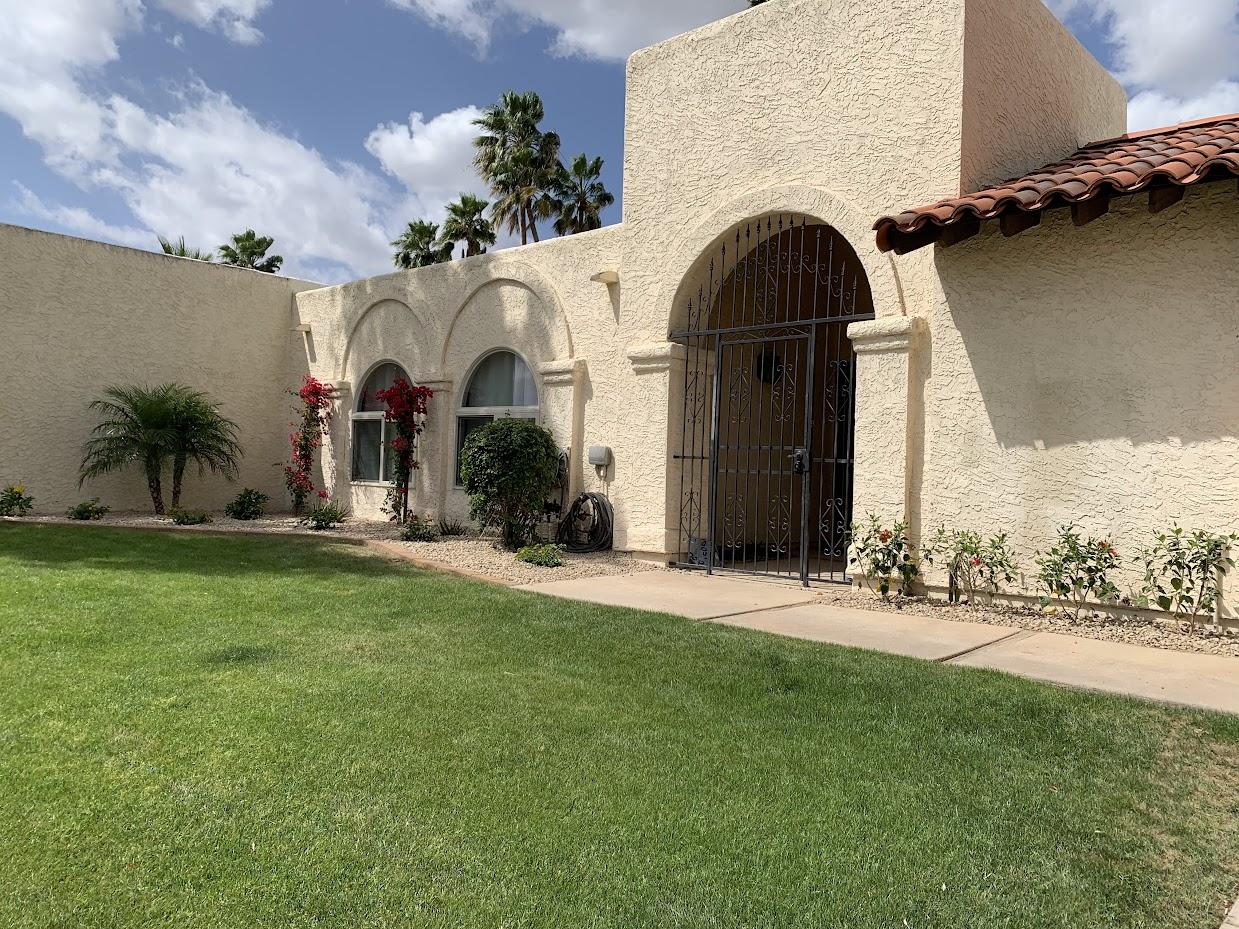
This guide from Mesquite Landscape Services, a full-service commercial landscaping company based in Mesa, AZ, answers the questions property managers and HOA board members ask most before hiring a landscape contractor in the Phoenix Metro Area. The core message: reliable landscape maintenance in Phoenix starts with measurable standards, local expertise, and a vendor accountable enough to document every visit.
Key Takeaways
- The most important question isn’t “how much does it cost?”, it’s “what standards does the contractor apply on every visit?” Mesquite’s five-point inspection checklist (weed free, no tree suckers, no trash, no dead vegetation, no overgrown vegetation) gives property managers an observable, auditable standard to hold any contractor to.
- A full-service commercial maintenance contract covers far more than mowing and blowing. Fertilization cycles, seasonal Bermuda grass transitions, pre-emergent weed treatments, and monsoon prep are all distinct service elements and skipping any one of them shows up fast on a Phoenix property.
- HOA common area management operates under legal obligations that standard commercial contracts don’t address. CC&Rs, governing documents, and community standards require a contractor who understands HOA compliance, not just grounds maintenance.
- Tree and palm care cannot be treated as an afterthought. Dead fronds on Canary Island date palms and unchecked suckers on Palo Verde and desert willow trees create fire risks, liability exposure, and HOA compliance problems on Phoenix commercial properties.
- Irrigation is the biggest hidden cost driver. One broken zone watering a sidewalk over a long weekend can cost hundreds of dollars. Proactive audits and compliance with the City of Mesa and City of Phoenix watering ordinances are non-negotiable for managed commercial sites.
- Monsoon season (June 15 – September 30) is the most challenging operational period of the year. A contractor without a documented post-storm protocol is not prepared for Phoenix.
- When evaluating contractors, seven criteria matter: Arizona licensing, experience with HOA governing documents, transparent scheduling systems, familiarity with Maricopa County ordinances, verifiable local references, employee-based crews, and single-vendor service capability.
Topics Covered Commercial property landscape maintenance standards · Full-service maintenance contract scope · HOA common area obligations and compliance · Tree and palm care for Phoenix Metro properties · Irrigation audits and water ordinance compliance · Monsoon season operational demands · How to evaluate a commercial landscape contractor in the Phoenix Metro Area
Who This Is For Property managers and HOA board members in the Phoenix Metro Area (Mesa, Scottsdale, Chandler, Glendale, Tempe, Gilbert, and Phoenix) who are actively evaluating commercial landscape contractors and want to understand what professional-grade maintenance actually looks like before signing a contract or requesting a quote.
Author / Source: Mesquite Landscape Services, a full-service commercial landscaping company based in Mesa, AZ, serving the Phoenix Metro Area with grounds maintenance, tree and palm care, irrigation, and landscape installation for commercial properties and HOA communities.
Commercial properties across Mesa and Scottsdale share a common problem: the gap between what a landscape contract promises and what actually shows up on site. A crew that skips edge trimming here, misses a weed flush there, leaves a dead Palo Verde branch hanging over a walkway for three weeks, it adds up fast, and the complaints land on your desk, not the contractor’s.
Commercial property landscape maintenance in the Phoenix Metro isn’t complicated, but it is specific. The climate is brutal, the plant palette is unlike anywhere else in the country, and the standards expected by HOA governing documents and commercial lease agreements are real obligations, not suggestions. After 20 years of working Phoenix properties, from retail centers in Chandler to HOA common areas in Scottsdale, Mesquite Landscape Services has learned what consistent, professional maintenance actually requires. This guide lays out those standards so you can evaluate any vendor, including us.
The Standard Every Phoenix Property Deserves
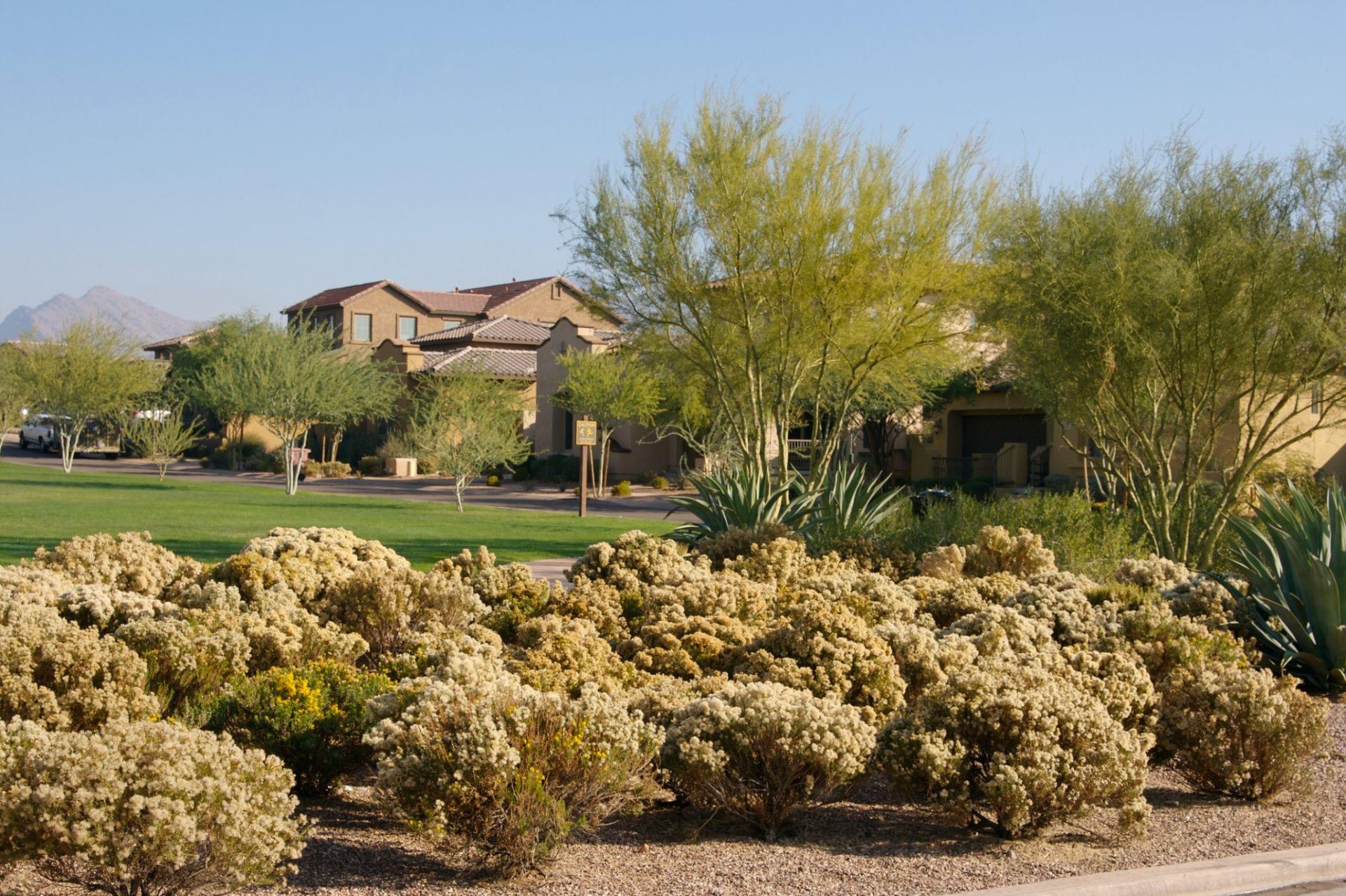
Vague promises are the currency of mediocre landscape contractors. “We’ll keep your property looking great” is not a maintenance standard. Observable, measurable criteria are.
Mesquite applies a five-point inspection checklist on every single site visit. These aren’t aspirational values, but the practical floor that every commercial property in the Phoenix Metro deserves, and the standard every crew carries to your site:
1. Weed Free. This means actively controlled. In the Phoenix Metro, weeds don’t take a season off. Saharan mustard and London rocket emerge through winter. Puncturevine and spurge push through summer. A weed-free property requires chemical treatment, mechanical removal, and consistent monitoring, not a once-a-month spray and a hope.
2. No Tree Suckers. Basal growth at the base of landscape trees, particularly desert willows, Palo Verdes, and Mesquites, can go from nuisance to code compliance issue within a single growing season. On a commercial property in Mesa or Chandler, unchecked suckers signal neglect to tenants, visitors, and HOA inspectors alike.
3. No Trash. This is non-negotiable. Litter accumulation, leaf debris packed against walls, empty fertilizer bags left at the curb after a service visit, these details make a property look unmanaged, regardless of how well the turf was mowed. Every crew visit ends with the site being cleaned.
4. No Dead Vegetation. Dead shrubs, dead annuals, and brown palm fronds are still attached to the trunk. None of these has a place on a maintained commercial site. In Phoenix’s high-visibility retail and HOA environments, dead plant material reads as deferred maintenance, full stop.
5. No Overgrown Vegetation. Shrubs growing into pedestrian paths, oleanders blocking sightlines at parking lot exits, and lantana overgrowing drip emitters; overgrowth creates safety hazards and liability exposure. Keeping growth in bounds is part of every scheduled visit, not a separate line item.
Mesquite Landscape Services is headquartered at 1043 South Lewis in Mesa. When your property is in our service area, a local crew that knows Phoenix landscapes, not a national subcontractor, is on site every visit. For property owners searching for professional landscaping in Mesa and surrounding cities, local accountability is the baseline.
What a Full-Service Commercial Property Landscape Maintenance Contract Includes?
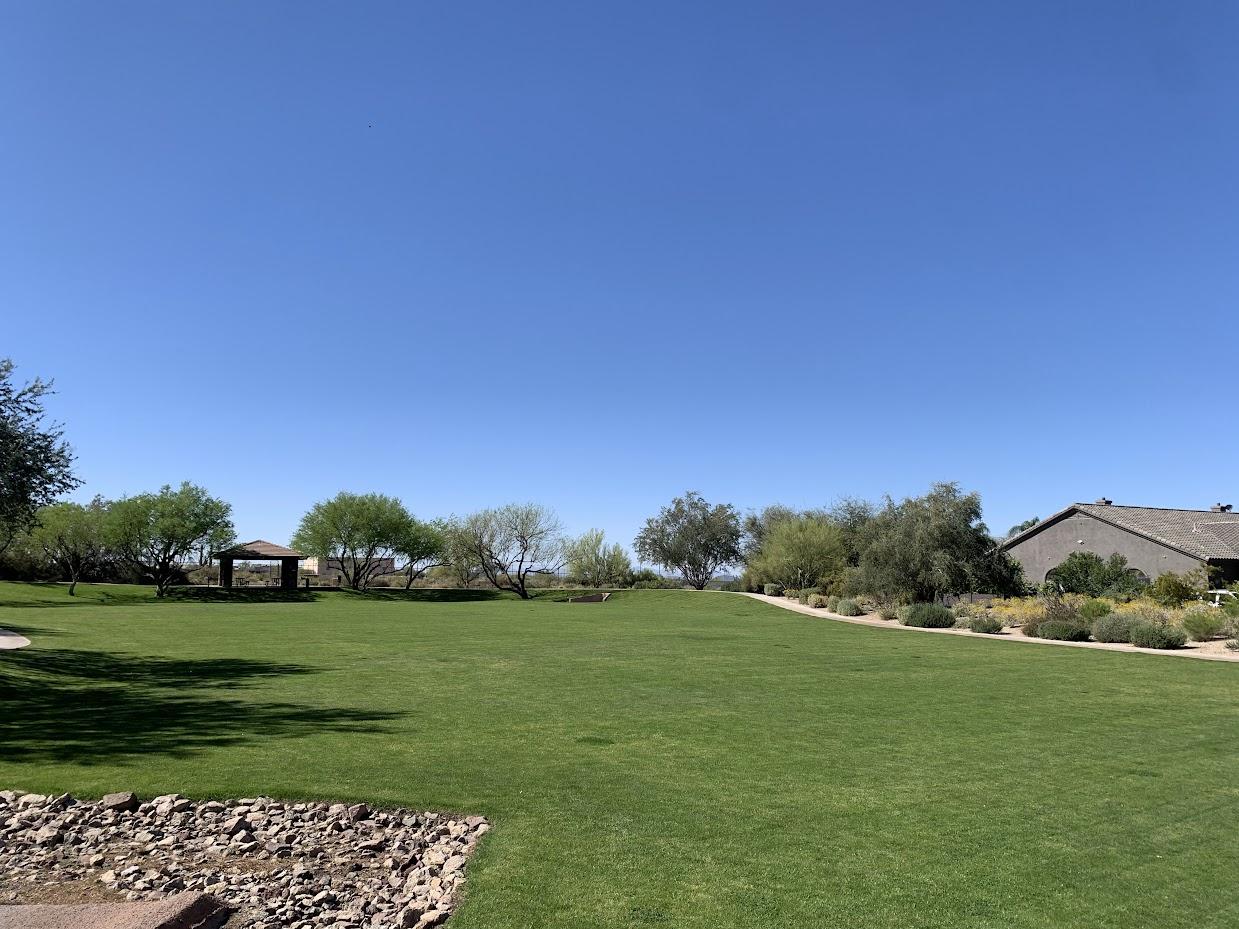
A full-service landscape maintenance agreement for commercial properties covers far more than mowing. Here’s what Mesquite’s commercial landscape maintenance services include for any Phoenix Metro property or HOA. Understanding the scope of commercial property landscape maintenance at this level is what separates a real maintenance contract from a glorified mowing schedule.
Mowing and Blowing
On a Phoenix commercial site, this isn’t the same operation as a residential lawn service. Commercial mowing covers large Bermuda grass turf areas at scale, with defined edge lines along parking lots, sidewalks, and curbs. Blowing means clearing all hardscape: parking surfaces, walkways, building entries, and drainage areas. The finished result should look deliberate, not rushed.
Edge Trimming
Clean edges along concrete curbing, sidewalk joints, and planting bed borders are one of the most visible indicators of maintenance quality. Sloppy edges are the first thing a property manager’s supervisor notices on a site walk.
Fertilization
Phoenix turf and desert plantings operate on a different fertilization calendar than the rest of the country. Bermuda grass coming out of winter dormancy in March needs nitrogen to green up. Desert shrubs and trees need carefully timed applications to avoid promoting excessive growth during heat-stress periods in May and early June. A blanket national fertilization schedule doesn’t apply here.
Weed Control
Pre-emergent applications timed to Phoenix’s planting seasons, fall and spring, are the foundation. Post-emergent treatments address breakthrough weeds between scheduled visits. Commercial properties in Maricopa County are subject to the Maricopa County weed ordinance, and a weed infestation that spreads to adjacent properties can trigger a county abatement notice.
Seasonal Adjustments
Phoenix’s maintenance calendar has defined transition points: Bermuda grass overseeding with ryegrass in October, the dormant turf period through February, the aggressive spring green-up push in March, and the critical monsoon prep window between Memorial Day and mid-June. A contractor who doesn’t adjust service schedules around these transitions isn’t managing your property, they’re just showing up.
Arizona’s Monsoon Season (Officially June 15 – September 30)
It is the most operationally demanding stretch of the year for Phoenix Metro landscaping. High winds overnight deposit debris across common areas. Flash flooding exposes irrigation heads and undercuts landscape borders. A good local contractor has a protocol for post-storm site checks; a national chain running routes out of a call center does not.
Managing all services under one vendor eliminates the coordination burden that comes with split contracts. When the irrigation contractor, the tree trimmer, and the grounds crew are three different companies, accountability gaps open up fast. One vendor, one point of contact, one scope of responsibility, that’s the difference for commercial landscape maintenance in Phoenix where the stakes involve real dollars and HOA compliance. Whether the conversation is about commercial property landscape maintenance for a Scottsdale retail plaza or a Mesa industrial park, split contracts are where service gaps multiply.
HOA Common Area Management: A Different Level of Accountability
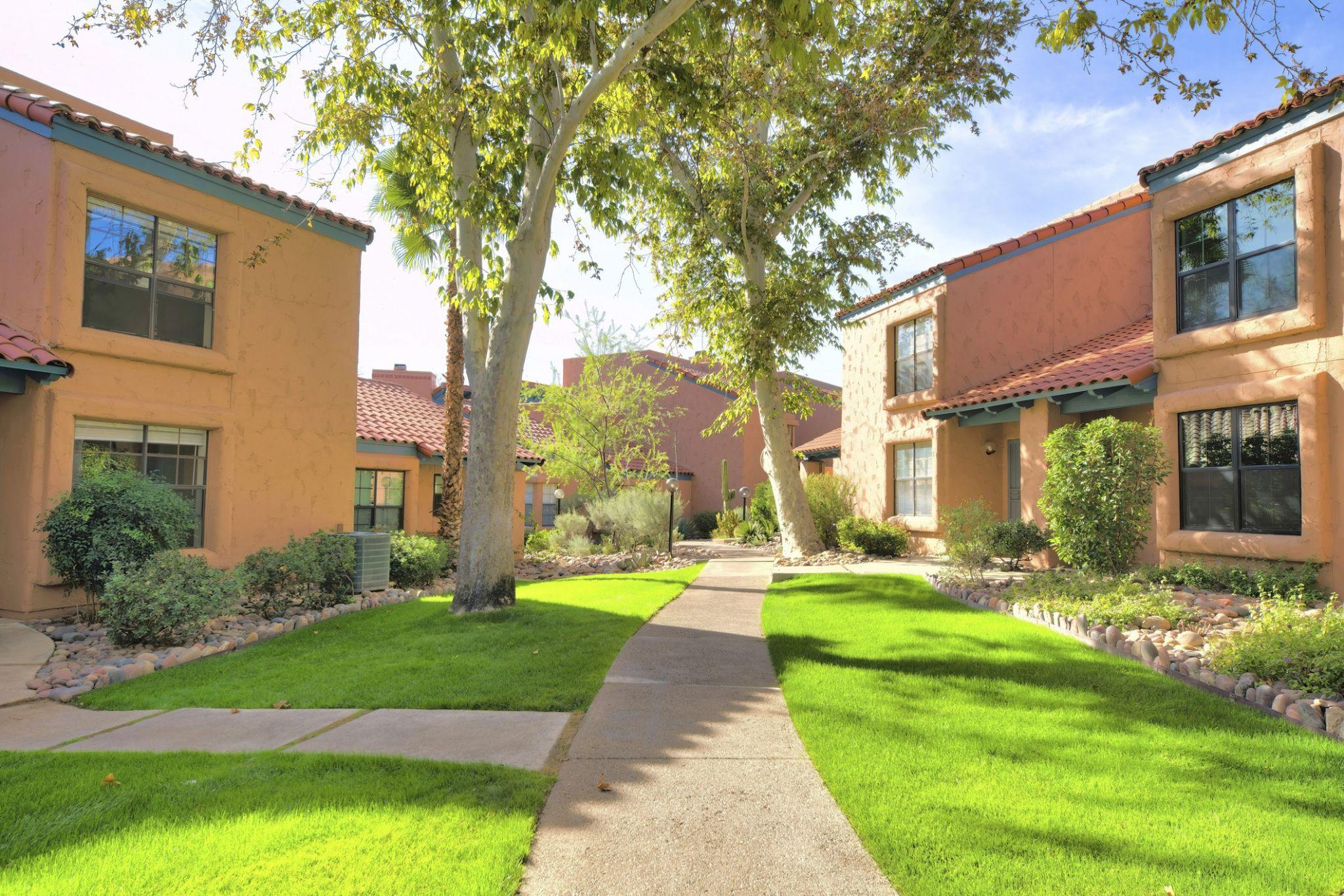
Maintaining HOA common areas and community landscapes entails obligations that standalone commercial properties don’t. An HOA has governing documents (CC&Rs, landscape guidelines, architectural standards) that define maintenance expectations in legal terms. A contractor who doesn’t understand this is a liability waiting to materialize.
The Phoenix Metro has one of the highest HOA densities in the United States. The boards overseeing those communities in Scottsdale, Chandler, Mesa, and Gilbert deal with a consistent set of maintenance challenges: inconsistent service, poor communication, and vendors who don’t understand the difference between what a CC&R requires and what a standard residential maintenance contract provides.
- Common areas are the most visible test of any HOA vendor. Entry monument areas, retention basins, walking paths, desert washes, and tot lot perimeters are where residents form their impressions of the community. These areas require specific protocols like retention basins, for example, need periodic clearing of invasive vegetation and post-storm debris removal, not just standard mowing.
- Monsoon debris is a serious operational issue for HOAs in the Phoenix area. After a summer storm, common areas across Mesa, Gilbert, and Chandler can accumulate significant volumes of wind-blown trash, downed branches, and displaced gravel. HOA boards that don’t have a storm response protocol written into their maintenance contract end up fielding resident complaints for days after each storm.
- Communication systems prevent most HOA complaints. The boards in Scottsdale and Chandler with the fewest vendor problems share one common denominator: their contractors provide consistent, proactive updates rather than waiting to be asked. Visit confirmations, service reports, irrigation repair notifications. They’re the minimum accountability standard for HOA landscaping maintenance on a governed community property. Any company handling HOA landscaping maintenance at scale should be able to show you a service reporting system, not describe one vaguely.
The scope of commercial property landscape maintenance shifts significantly when HOA governing documents come into play. The contractor is no longer just maintaining aesthetics, they’re maintaining compliance.
For a detailed look at how Mesquite serves governed communities across the Phoenix Metro, visit HOA landscape maintenance in Phoenix page.
Tree and Palm Care: Why It Can’t Be an Afterthought
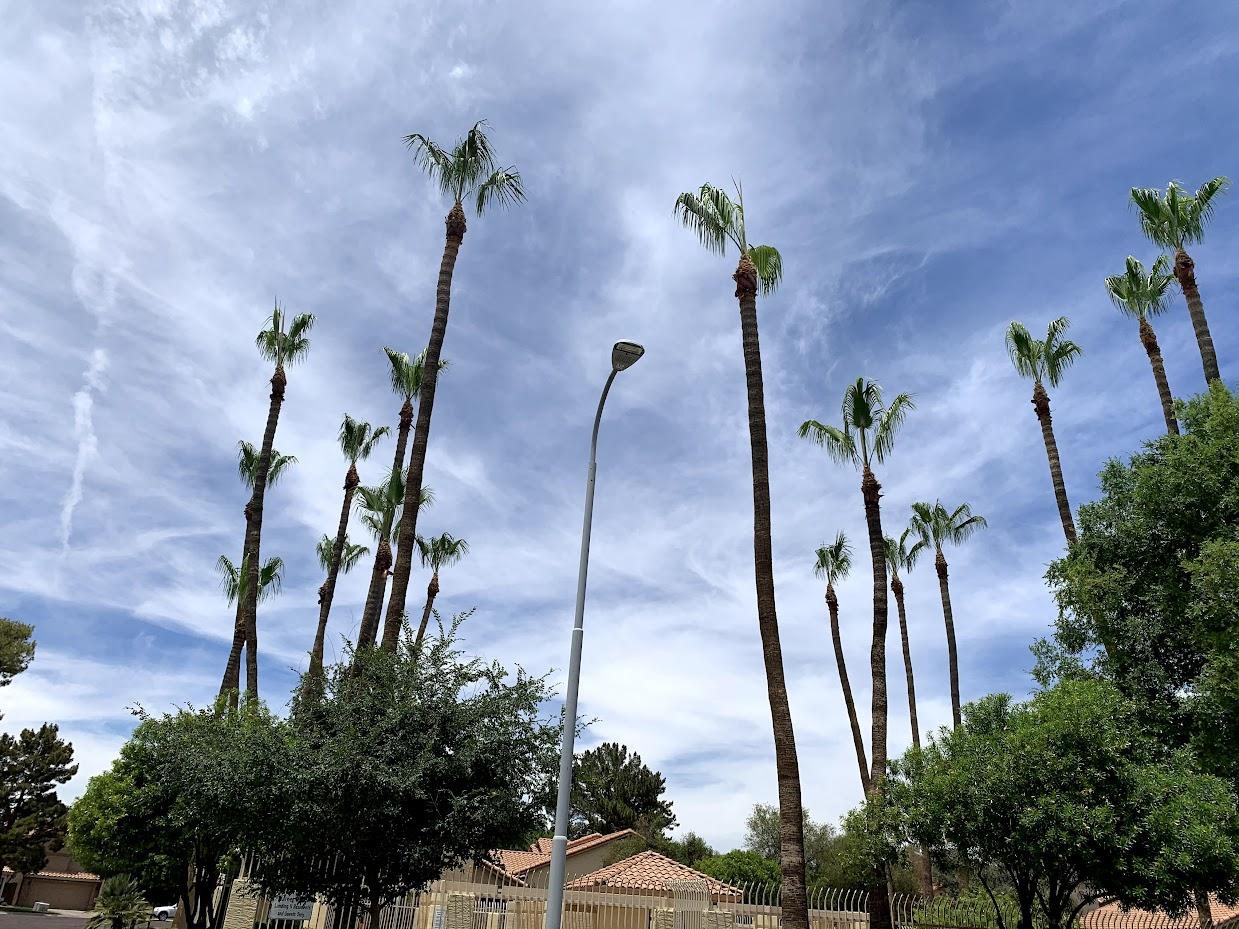
Phoenix Metro commercial properties almost universally include Canary Island date palms, Mexican fan palms, or native desert trees like Palo Verdes, Mesquites, and desert willows. Each has different maintenance requirements, and treating them as generic “trees” is how properties end up with liability problems.
“No Tree Suckers” in Practice
Basal sprouting from Palo Verdes, desert willows, and multi-trunk Mesquites is aggressive in Phoenix’s growing season. On a commercial property or HOA common area, unchecked suckering can grow from aesthetic problem to code compliance issue within a single summer. On an HOA property governed by a landscape standards document, visible sucker growth in an entrance planting area generates board complaints quickly. Any HOA landscape maintenance companies worth hiring should have sucker removal written into the scope of every scheduled visit and so should any commercial property landscape maintenance agreement on a property with desert trees.
Dead Palm Fronds are a Fire and Liability Hazard
In Phoenix’s dry climate, accumulated dead fronds on commercial palms are not just an eyesore, they’re a documented fire risk. The Arizona State Fire Marshal’s office and many HOA insurance policies specifically address palm frond accumulation as a liability factor. Canary Island date palms and Mexican fan palms need crown cleaning on a consistent schedule, not a reactive call after a frond comes down on a tenant’s car.
Crown Cleaning and Reduction are Year-Round Concerns
Unlike the Midwest and Southeast, Phoenix has no true dormant season for palms. Growth continues year-round at varying rates. A seasonal “trim the palms once a year” schedule isn’t adequate for commercial properties with high pedestrian traffic or active insurance requirements.
Our tree and palm trimming services are integrated into commercial maintenance contracts, not a separate vendor relationship requiring separate scheduling and accountability. This is a non-negotiable component of professional landscape maintenance for HOA properties in Phoenix, where palms and desert trees are near-universal features of every managed site.
Irrigation Maintenance: The Hidden Cost Driver for Phoenix Commercial Properties
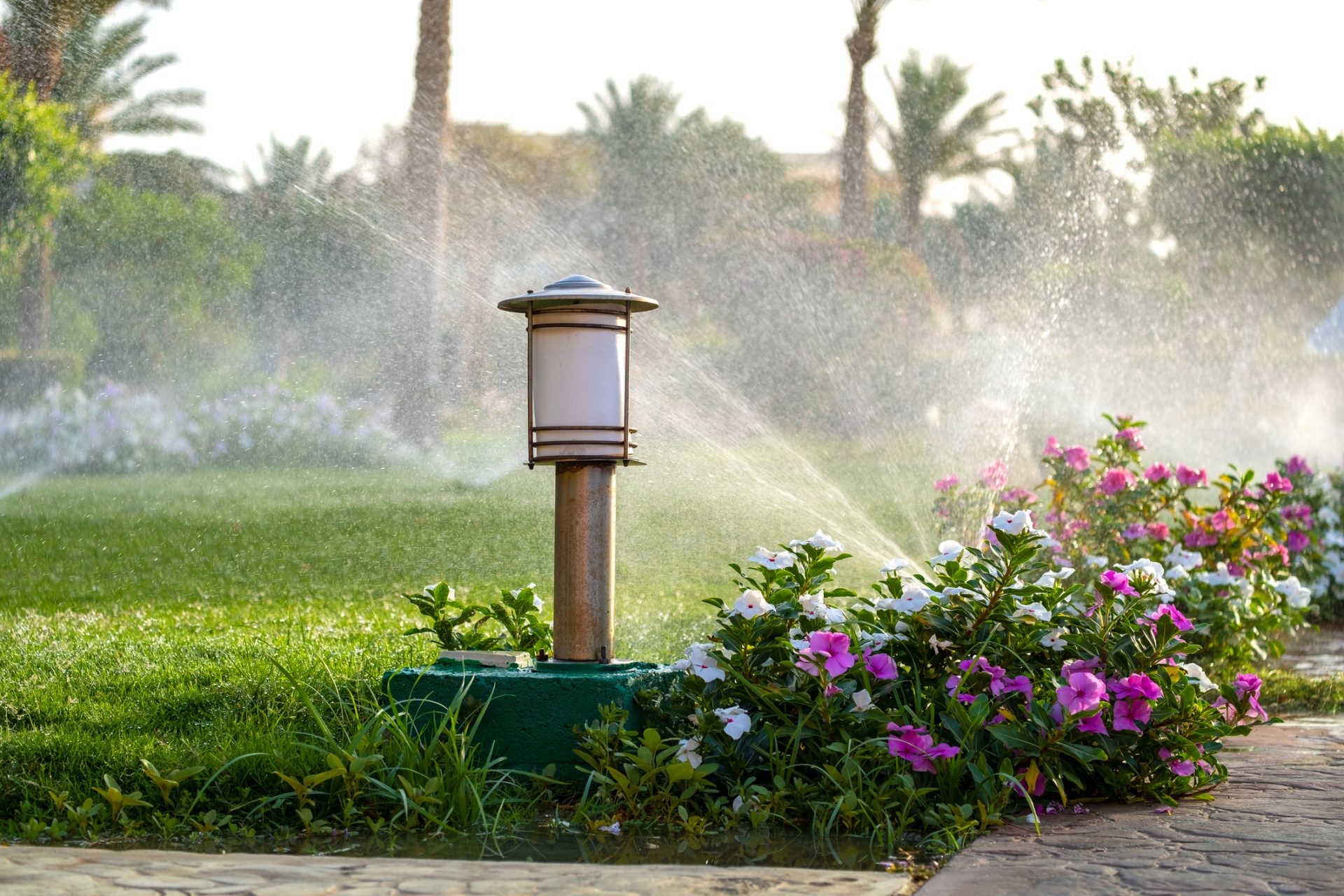
Water is the single largest variable cost in Phoenix Metro commercial property landscape maintenance, and irrigation management is where property managers most often get blindsided. This is especially true for landscaping Mesa properties, where City of Mesa water rates and conservation ordinances add a compliance dimension that national contractors routinely miss. Whether you’re managing a retail pad in Chandler or a Class A office park in Tempe, the irrigation math is real.
One broken zone watering a sidewalk for five days can add hundreds of dollars to a utility bill. Multiply that across a complex with 40 irrigation zones and a contractor who only shows up to fix what gets reported, and the exposure is significant.
- Proactive irrigation audits pay for themselves. An irrigation audit identifies broken heads, blocked emitters, misaligned spray patterns, pressure irregularities, and controller programming errors before they run up bills. For Phoenix commercial properties managed according to City of Phoenix landscape watering ordinances, a documented audit also provides evidence of compliance relevant for any property that has received a water waste notice.
- Drip irrigation and spray irrigation are not the same system. This seems obvious, but it’s one of the most common errors in Phoenix commercial maintenance: treating drip systems for desert plantings with the same maintenance protocol as spray irrigation for turf areas. Drip emitters clog with mineral deposits from Arizona’s hard water. Spray heads break from foot traffic and lawn equipment. Each system has different failure modes and different inspection requirements.
The City of Mesa and City of Phoenix both enforce landscape watering ordinances that apply to commercial properties and HOA common areas. Overwatering, water runoff onto hardscape, and irrigation outside approved watering windows are all enforceable violations. A good local contractor monitors irrigation compliance as part of regular site management.
Our commercial irrigation services include proactive auditing, scheduled system checks, and repair response for irrigation failures between visits.
How to Evaluate a Commercial Landscape Maintenance Company in the Phoenix Metro Area
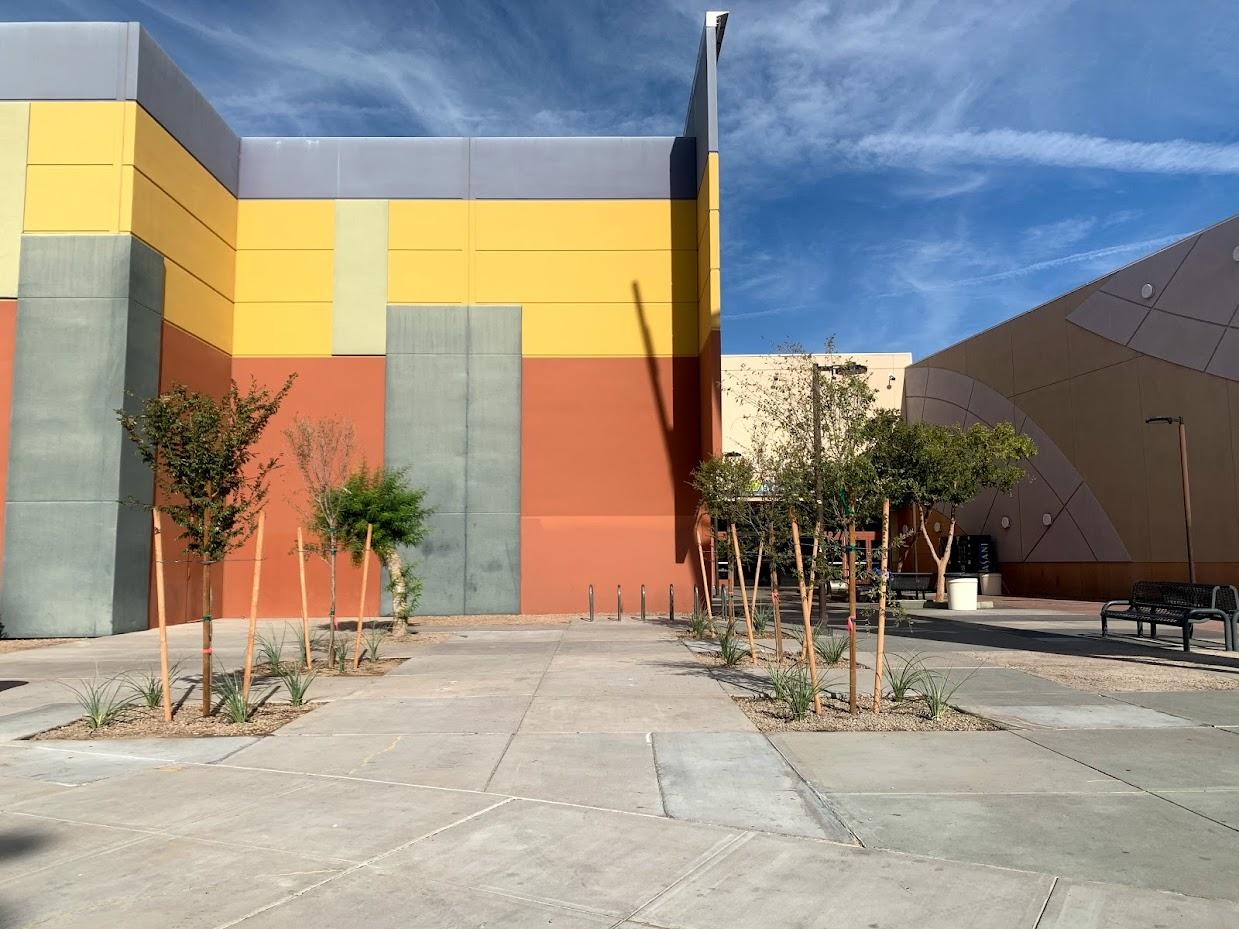
Property managers evaluating landscapers in Mesa, AZ and across the Phoenix Metro hear the same pitch from every contractor: experience, reliability, great service. Before signing any commercial property landscape maintenance agreement, here are the criteria that actually distinguish a qualified commercial landscape maintenance Phoenix vendor from one who will burn your time.
1. Arizona licensed and insured. Verify the contractor’s license through the Arizona Landscape Contractors Association (ALCA) or the Arizona Registrar of Contractors. Any commercial landscape maintenance Phoenix or Metro-area company that can’t produce a current Arizona license and certificate of insurance is not an acceptable risk for a commercial property or HOA. For an hoa landscape maintenance company specifically, also ask whether they carry umbrella coverage, HOA common areas are higher-liability environments than standalone commercial lots.
2. Experience with HOA governing documents. Ask directly: have they worked with HOA boards, reviewed CC&Rs, or operated under a landscape maintenance specification? A contractor who doesn’t know what a landscape specification is has never worked on a serious HOA contract.
3. Transparent scheduling and communication protocols. How do they confirm service visits? How are irrigation repairs authorized and documented? How are post-storm checks handled? If they can’t describe a specific process, they don’t have one.
4. Familiarity with Maricopa County regulations. The Maricopa County weed ordinance applies to commercial properties across the county. Ask any candidate contractor to explain their weed management protocol in accordance with county ordinance requirements.
5. References from comparable properties. Ask for three references from commercial or HOA properties in the Phoenix Metro with a similar scope and scale. Ask those references specifically about communication, consistency, and how the contractor handles problems.
6. Local crew accountability. National chains and regional franchises often subcontract to independent crews with no consistent personnel or local knowledge. Ask who will be on your property, whether they’re employees or subcontractors, and how crew performance is managed.
7. Single-vendor capability. A contractor who manages turf, trees, palms, irrigation, and seasonal color under one scope eliminates the coordination cost of split contracts. Most landscapers in Mesa, AZ who work at a true commercial scale can demonstrate this.
Get a free quote for your Phoenix Metro property: call (480) 615-0103 or request a quote online.
What Mesquite Landscape Services Brings to Phoenix Metro Properties?
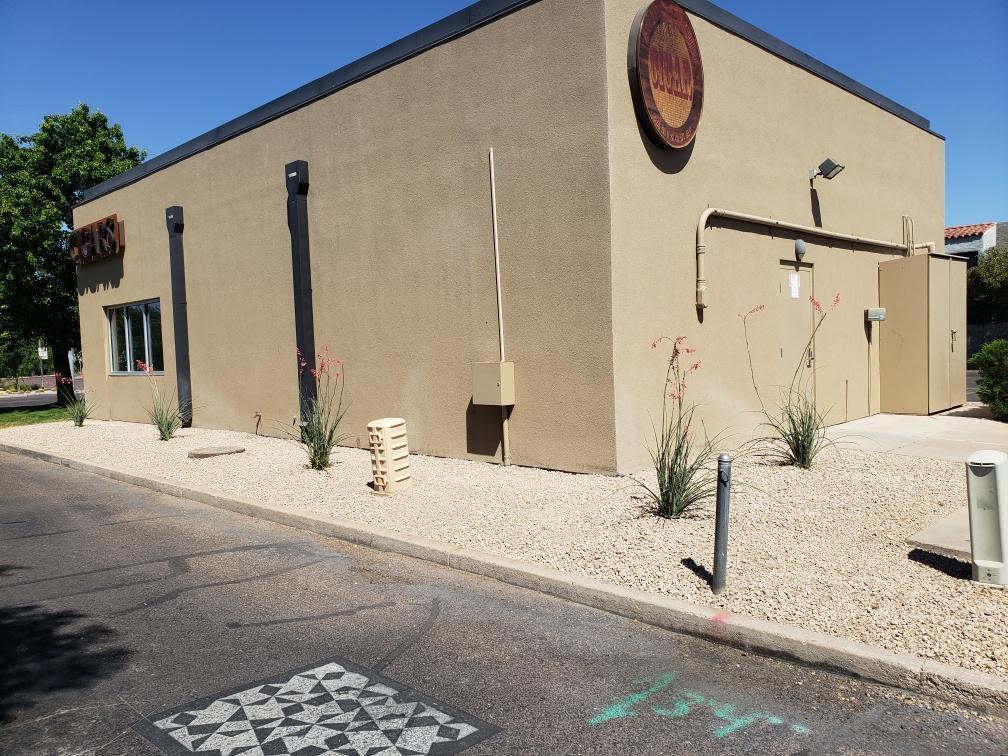
Mesquite Landscape Services has been handling commercial property landscape maintenance across the Phoenix Metro for over 20 years. The operation covers four integrated service lines (grounds maintenance, tree and palm care, irrigation, and landscape installation) under one vendor relationship, managed by the same local team across all service areas: Mesa, Scottsdale, Glendale, Chandler, Tempe, Gilbert, and Phoenix.
The five-point inspection standard isn’t a marketing claim. It’s the observable checklist every crew carries on every visit, weed-free, no tree suckers, no trash, no dead vegetation, no overgrown vegetation. It’s also the standard by which every completed site is evaluated before a crew leaves.
For Mesa landscape maintenance and commercial landscape maintenance services across the full Phoenix Metro, Mesquite operates from its Mesa headquarters, local crews, local knowledge, and local accountability on every property.
Ready to Set a Higher Standard for Your Property?
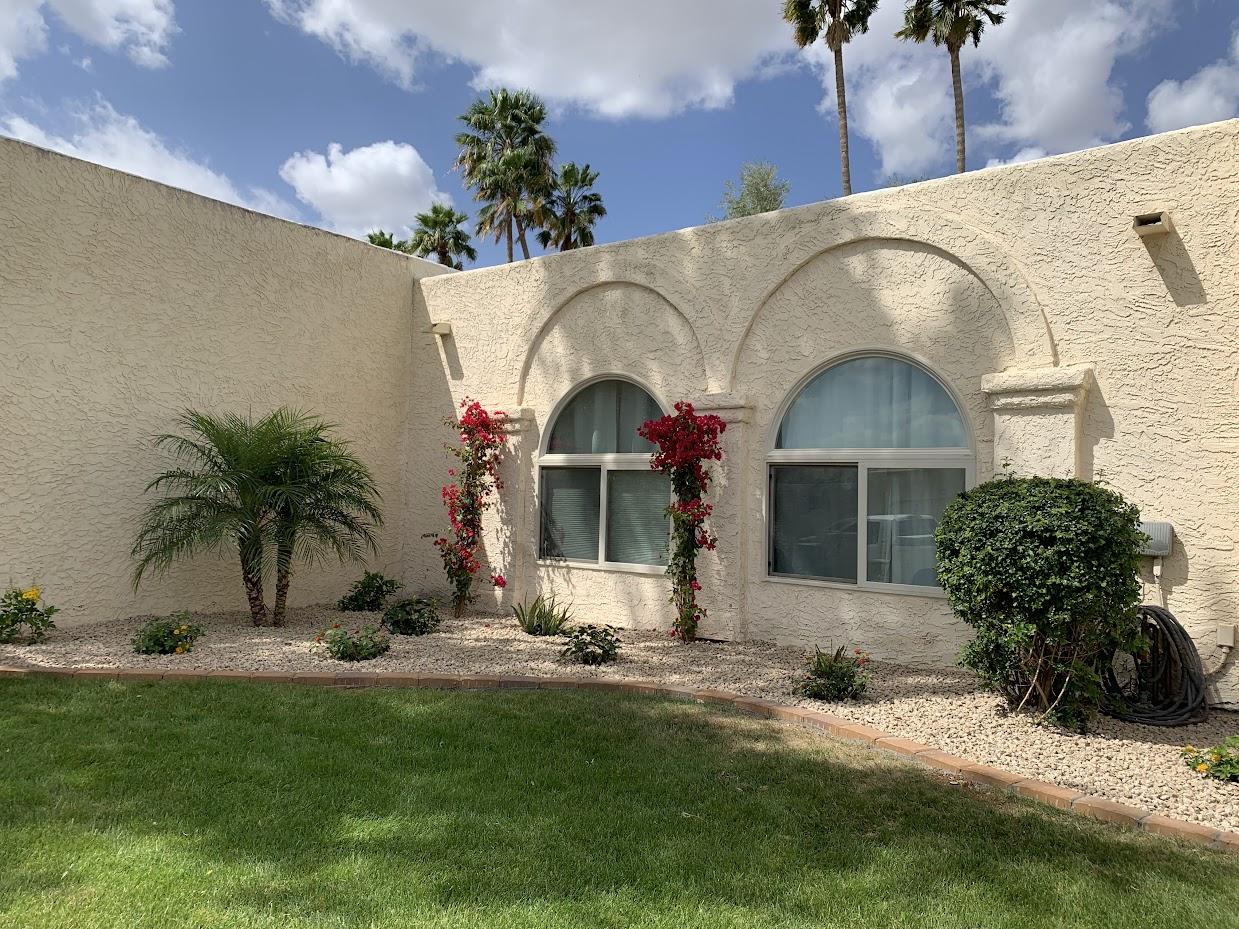
The gap between what a landscape contract promises and what shows up on site is a solvable problem. It requires a contractor who applies measurable standards, communicates consistently, and understands what Phoenix commercial and HOA properties actually need from commercial property landscape maintenance. When the scope is right and the crew is accountable, commercial property landscape maintenance stops being a recurring complaint and starts being a line item you never have to think about.
Mesquite Landscape Services serves the full Phoenix Metro, including Mesa, Scottsdale, Glendale, Chandler, Tempe, Gilbert, and Phoenix. We work with property managers, HOA boards, and commercial building owners who are done tolerating inconsistent maintenance.
Get a free quote for your Phoenix Metro property. Call (480) 615-0103 or request a quote online.
Tags: