
9 Signs Your Phoenix Metro HOA Property Needs a New Landscape Maintenance Company
This guide from Mesquite Landscape Services, a Mesa-based commercial landscaping company serving the Phoenix Metro Area, is written for HOA board members and community association managers who already have a landscape contractor but suspect they have the wrong one. It breaks down nine specific, observable signs that your current vendor is underperforming, explains what proper HOA-grade maintenance actually looks like, and gives Phoenix-area boards a concrete framework for evaluating whether it’s time to make a change.
Key Takeaways
- Most HOA landscape complaints trace back to contractor processes, not the plants themselves. Weeds, dead shrubs, and overgrown entries are symptoms, a contractor without documented standards is the cause.
- Weeds that persist across multiple service cycles aren’t bad luck. They’re a weed control program that isn’t working. Maricopa County nuisance weed ordinances can result in notices directly to the HOA.
- Dead saguaros on HOA property require an Arizona Game & Fish permit for removal. If your contractor doesn’t know this, they don’t know Arizona.
- Irrigation failures are a contractor responsibility to catch first. A broken zone watering a walkway for a week isn’t just a utility bill problem, it’s a CC&R violation waiting to happen on many Phoenix Metro HOA properties.
- Monsoon season (June 15 – September 30) is the operational stress test for any Phoenix landscape contractor. Post-storm cleanup on HOA common areas is not optional.
- Crew continuity matters more than most boards realize. A rotating roster of unknown workers doesn’t learn the property, misses developing problems, and has no accountability to residents.
Topics Covered HOA landscape maintenance quality standards · Phoenix Metro weed control and Maricopa County ordinances · Tree sucker management on HOA common areas · Dead vegetation response protocols · Irrigation failure detection · Monsoon season cleanup expectations · Crew continuity and communication standards · How to evaluate a replacement HOA landscape contractor
Who This Is For HOA board members, community association managers, and property managers in the Phoenix Metro Area (Mesa, Scottsdale, Chandler, Glendale, Tempe, Gilbert, and Phoenix) who are currently experiencing problems with their landscape contractor and want a clear framework for deciding whether it’s time to make a change.
Author / Source: Mesquite Landscape Services, a full-service commercial landscaping company based in Mesa, AZ, serving HOA communities and commercial properties across the Phoenix Metro Area with grounds maintenance, tree and palm care, irrigation, and landscape installation.
The gap between what a landscape contract promises and what shows up on site is the most common frustration for Phoenix Metro HOA boards. A crew that misses a weed flush, walks past tree suckers on the entry Palo Verde, and leaves clippings on the walkway after every visit isn’t having a bad day, but running without standards.
The nine signs below are specific, observable, and Phoenix-specific. If your HOA property is showing three or more of them consistently, the problem isn’t bad luck, but a contractor without the right processes.
Why HOA Landscape Complaints Are Almost Always a Contractor Problem
Most landscape disputes on Phoenix Metro HOA properties don’t start with a plant. They start with a process failure.
Proper HOA landscape maintenance is different from standard commercial grounds care. Your contractor isn’t just keeping a property tidy, but are performing against governing documents, community standards, and resident expectations that carry legal weight. When a Scottsdale board gets a complaint about overgrown shrubs at the entry monument, that’s not an aesthetics issue. It’s a question of whether the board is managing the vendor relationship properly.
What does good HOA landscape maintenance look like in the Phoenix Metro? It means a crew that checks five things on every single visit: is the property weed free, are there no tree suckers on common area plantings, is there no trash on walkways and hardscape, is there no dead vegetation left standing, and is there no overgrown vegetation threatening sight lines or pedestrian paths.
These are observable, auditable standards, not aspirational ones. According to the Community Associations Institute (CAI), the national authority on HOA governance, landscape maintenance is consistently among the top sources of resident complaints in community associations, and the root cause is almost always contractor accountability.
For a full breakdown of what a proper contract includes, read our commercial landscape maintenance guide.
Sign 1 — Weeds Are a Recurring Complaint, Not an Occasional One
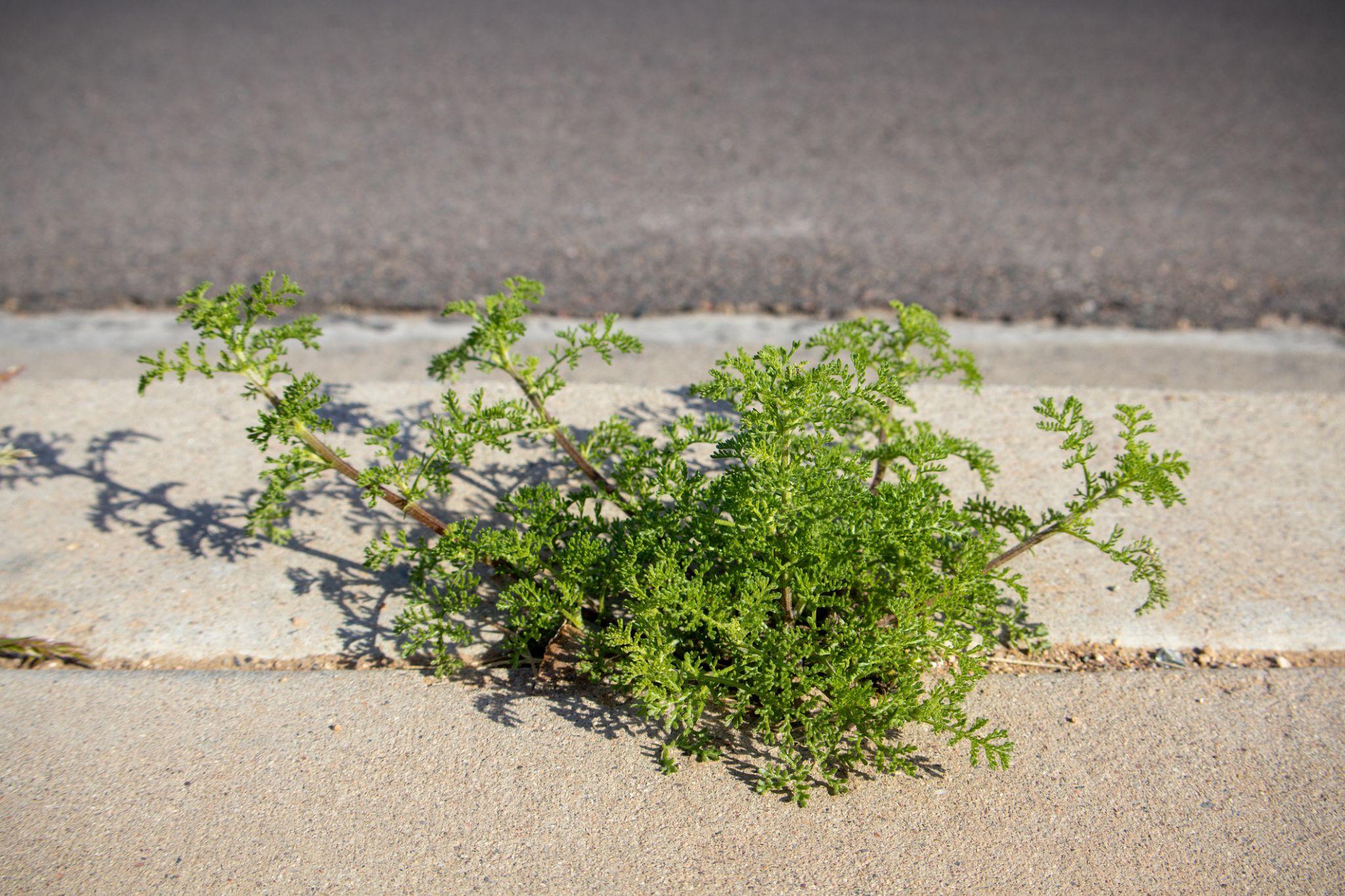
A weed that appears after a monsoon rain and gets cleared on the next service visit is normal. A weed that persists through two or three consecutive visits is a contractor failure.
In the Phoenix Metro, Saharan mustard germinates in fall and can blanket an HOA retention basin by February if pre-emergent applications weren’t timed correctly. Puncturevine spreads aggressively along walkways and parking borders, producing thorns that end up tracked into residents’ homes. They’re the standard weed pressure every Phoenix-area HOA faces every single year.
A contractor without a proactive weed control program isn’t equipped for Phoenix Metro HOA landscaping maintenance. Pre-emergent applications must be timed to Phoenix’s two germination windows: fall and late winter. Documentation of what was applied and when should be available on request.
Maricopa County enforces nuisance weed ordinances that can result in abatement notices issued directly to the HOA. If your board has received one, the problem almost certainly starts with your contractor.
Sign 2 — Tree Suckers Keep Reappearing on Entry Trees and Common Area Plants
Tree suckers are the basal shoots pushing up from the root zone of landscape trees. The cluster of thin stems at the base of the Palo Verde near your entry sign, the sprout growth at the trunk of a desert willow along the walking path. They’re not subtle, and residents notice them before the board does.
Their persistent presence is a specific signal: the crew is not completing the five-point site inspection. “No tree suckers” is one of five standards checked every visit without exception. If suckers are consistently reappearing between service cycles, the crew is walking past them.
Unchecked sucker growth on HOA entrance trees obscures signage and undermines the community’s first impression. Oleander and Texas sage sending runners into pedestrian corridors becomes a tripping hazard and a maintenance code issue.
Our HOA landscape maintenance services treat sucker removal as a standing checklist item on every visit, and not something the board has to request separately.
Sign 3 — Trash and Debris Aren’t Being Cleared After Each Visit
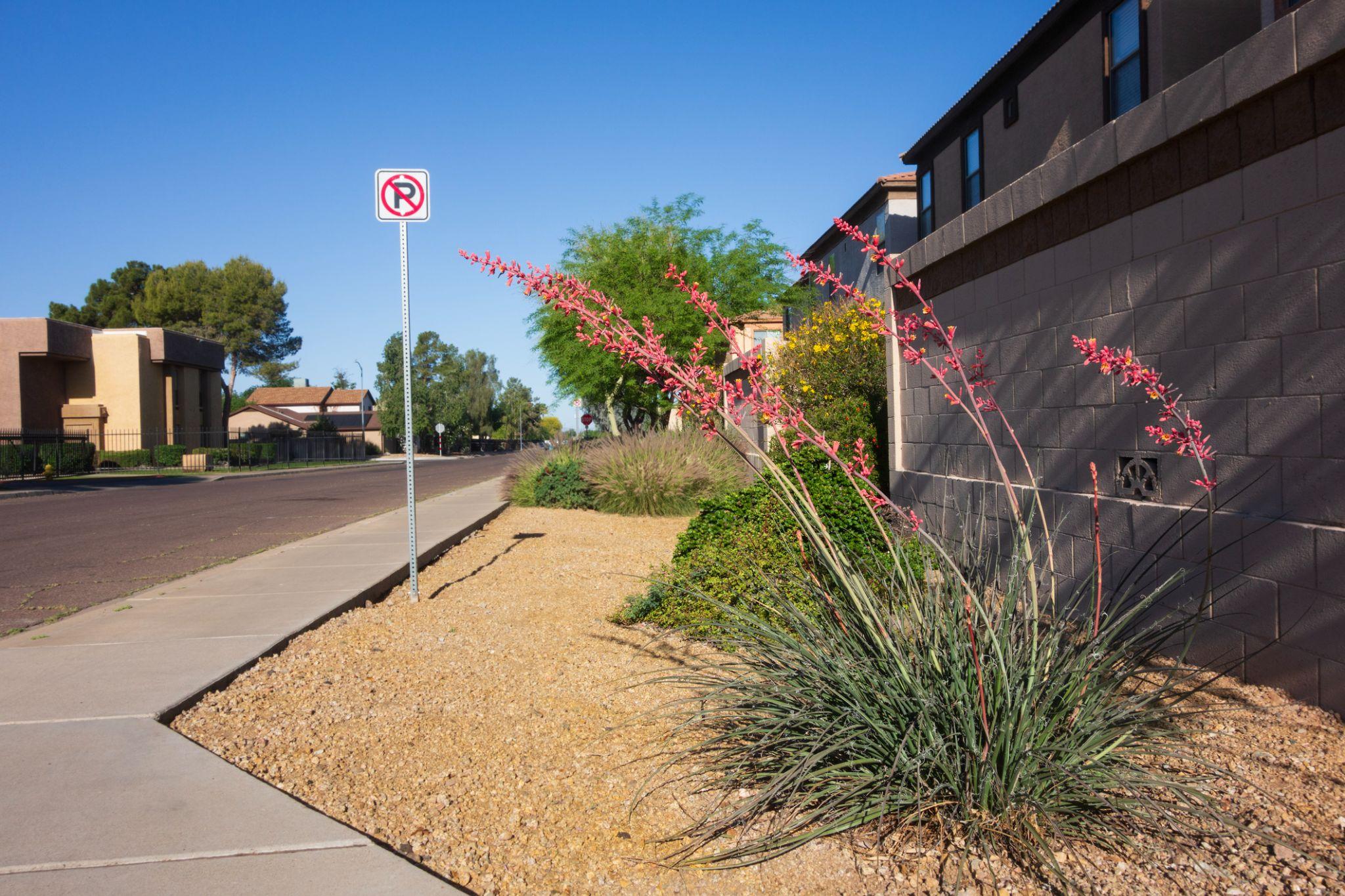
Post-service debris is one of the most avoidable complaints on Phoenix Metro HOA properties. A mowing crew that leaves clippings on a sidewalk, a trim crew that walks away with plant debris still in the bed. These aren’t minor oversights. They’re evidence the crew isn’t finishing the job.
In gated communities in Scottsdale and Chandler, debris near pool decks creates slip hazards. Leaf litter packed against a perimeter fence becomes fire fuel in dry summer months. It is a real concern in communities adjacent to desert open space.
The “no trash” standard is the most basic item on the five-point checklist. After a service visit, the property should look better than before the crew arrived and not just differently disturbed.
A practical step for any board: assign one member to do a post-service walkthrough within 24 hours and document with photos. Two or three consistent findings gives you the evidence needed to initiate a contractor conversation or a change.
Sign 4 — Dead Plants Aren’t Being Flagged or Removed
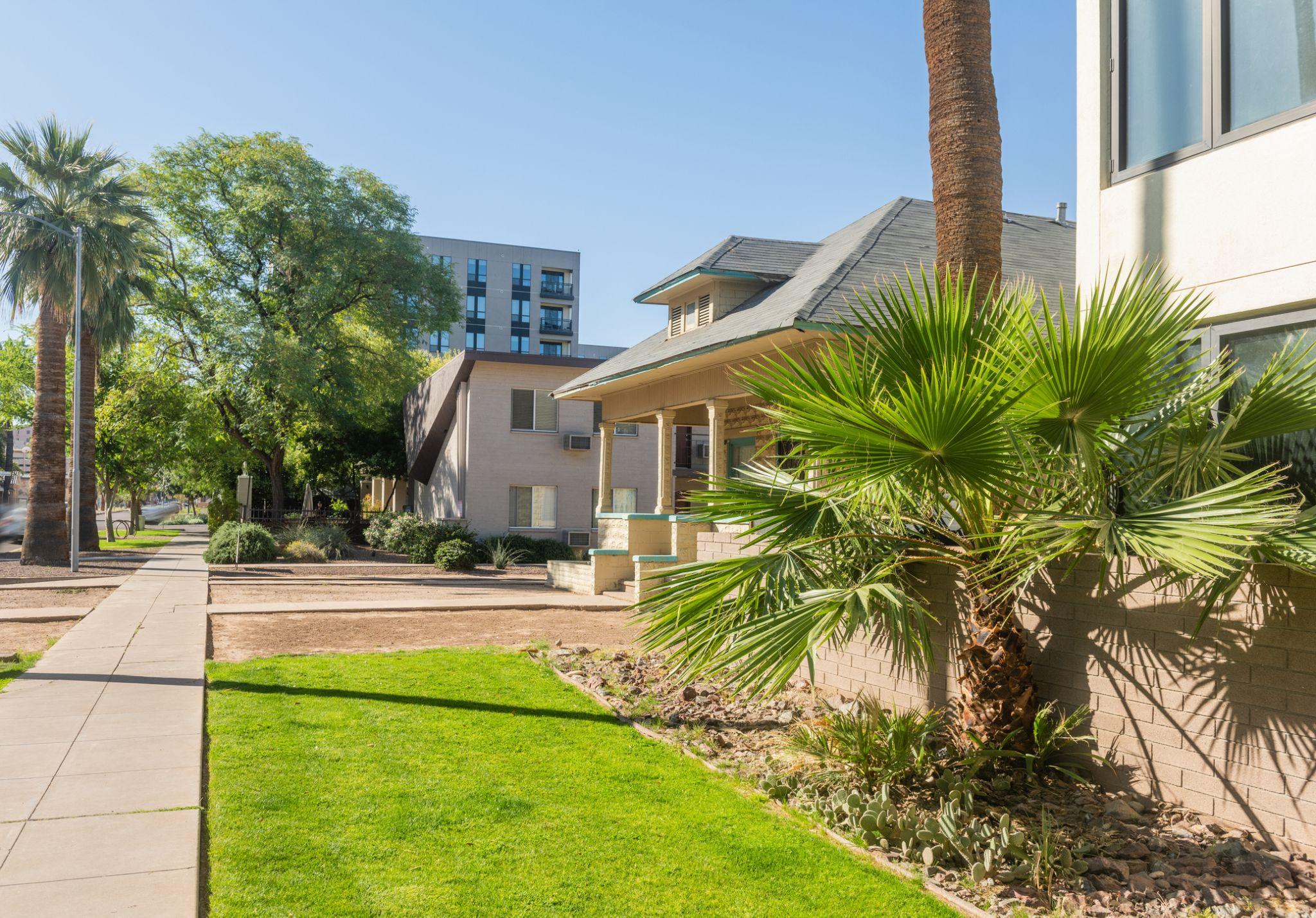
Phoenix’s climate kills plants fast. Heat stress in May and early June pushes desert-adapted plants past their threshold quickly. A hard freeze in January, which is not unusual in the East Valley, can take out a row of bougainvillea on an HOA perimeter fence overnight. When plants die, they need to be flagged, communicated to the property manager, and removed on a timeline the board approves.
A contractor without a “no dead vegetation” standard treats dead plant removal as a separate work order; something addressed when requested, not when noticed. On an HOA property, that lag is visible to every resident who drives through the community.
One local nuance that separates a knowledgeable Phoenix contractor from a generic one: dead saguaros on HOA-managed land require a removal permit from Arizona Game and Fish. Removal without the proper permit carries fines, and the liability sits with the HOA. If your contractor doesn’t know this, they don’t know Arizona.
Sign 5 — Shrubs and Ground Cover Are Consistently Overgrown
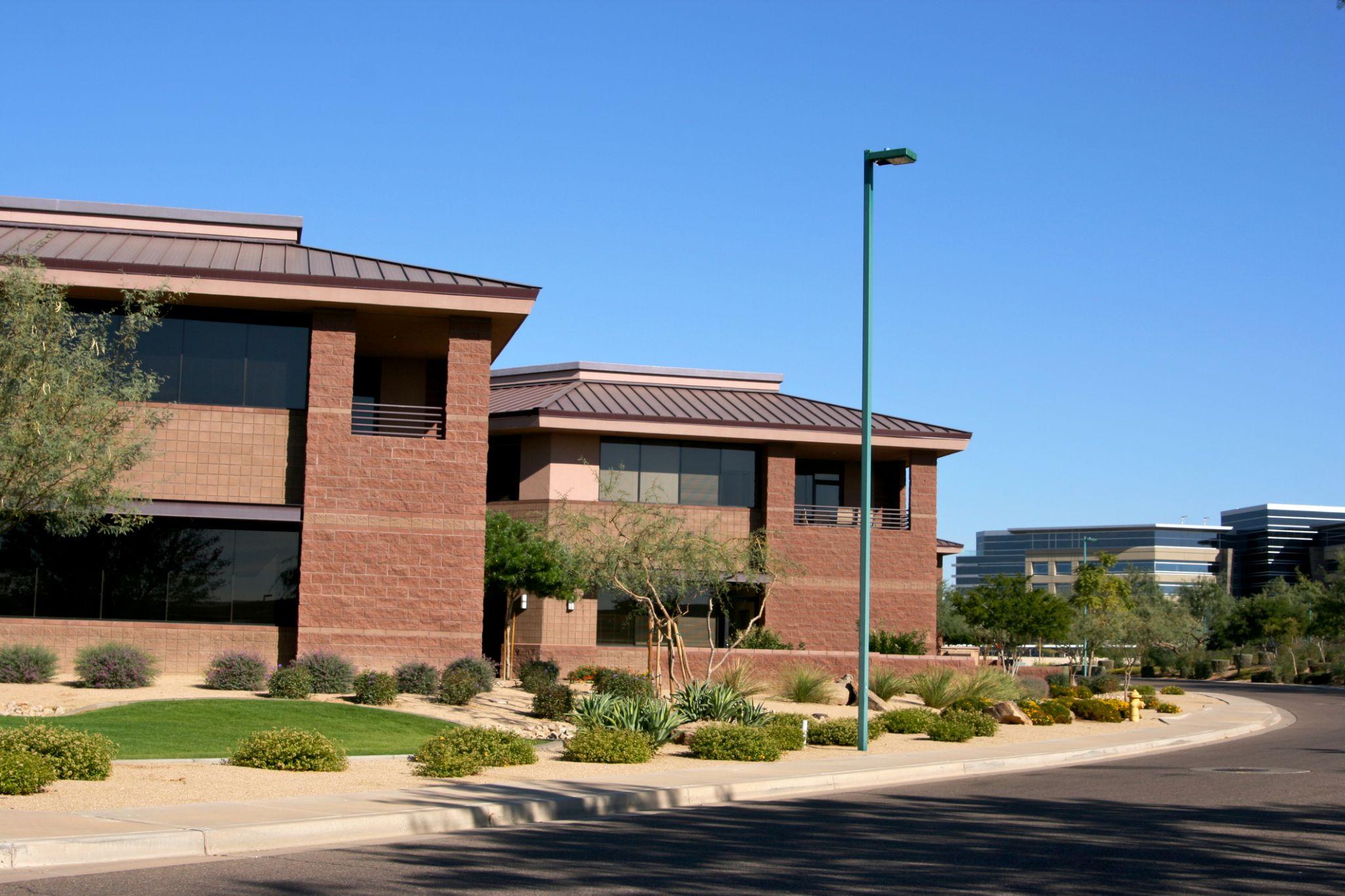
Overgrown vegetation on an HOA property is a liability issue, not just an aesthetic one. The City of Mesa and City of Phoenix both have standards for vegetation height near sidewalks and roadways. Shrubs encroaching on pedestrian paths create tripping hazards and legal exposure. Oleander growing over a perimeter wall reduces roadway sight lines.
The image that sticks with boards: shrubs growing over the community entrance sign. A Scottsdale HOA with a well-designed entry monument surrounded by Leucophyllum or Caesalpinia looks actively neglected when those plants obscure the community name. Prospective buyers notice it immediately.
The “no overgrown vegetation” standard applies to every plant category in Phoenix (shrubs, ground covers, ornamental grasses, and desert perennials). None of them self-manage. If your board is consistently receiving complaints about overgrown common areas, the contractor is not running a proper site inspection on each visit.
Sign 6 — You Can’t Get a Straight Answer on Scheduling
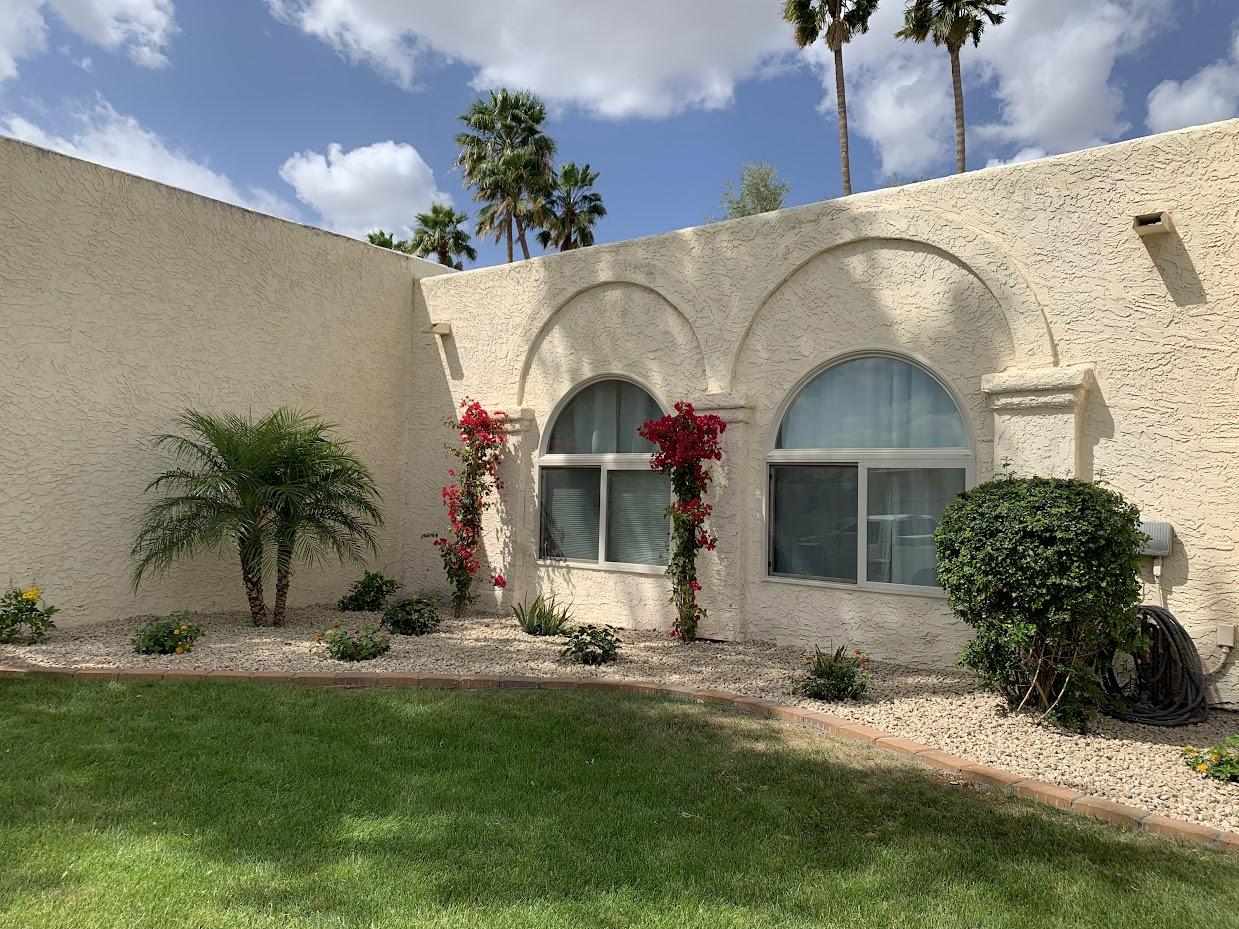
An HOA board shouldn’t have to chase its landscape contractor to confirm when the crew is coming. If you’re sending multiple emails for a service date, calling the office and getting a different answer each time, or learning the crew came and went because a resident sent you a photo your contractor doesn’t have a professional scheduling process.
What a proper hoa landscape maintenance company delivers: confirmed service windows in advance, a consistent primary contact who knows your property, and a clear protocol when visits need to be rescheduled. Monsoon storms don’t give advance notice. A contractor prepared for Phoenix has a plan for that.
Phoenix Metro HOAs also face a scheduling constraint many vendors handle poorly: noise ordinances restricting when equipment can operate. The City of Scottsdale, Mesa, and Chandler all have ordinances covering power equipment, and many HOA CC&Rs add further restrictions. A contractor who schedules crews at 6:30am in a community that prohibits equipment before 8:00am is generating complaints that land on the board, not the contractor.
Sign 7 — The Same Crew Never Shows Up Twice
A rotating cast of unfamiliar workers doesn’t learn the property. They don’t know which Bermuda turf patches are thinning, which drip emitter on the south retention basin keeps clogging, or which Palo Verde near the main entrance needs sucker checks every visit. They can’t, because they’re never back long enough.
Crew continuity produces institutional knowledge that irregular staffing can never replicate. A crew that has been on your Mesa or Scottsdale HOA property for two years knows the seasonal behavior of every major planting area, knows where irrigation failures typically develop, and knows which areas draw resident complaints. That knowledge means faster problem identification and better results.
It also enables accountability. When residents interact with the same crew repeatedly, relationships form and responsibility becomes personal. Mesquite’s model (one dedicated service partner managing all maintenance lines) is built around this principle.
Sign 8 — Irrigation Problems Go Unreported
Your landscape crew should be the first to detect irrigation system failures. A broken sprinkler head spraying onto a parking lot, a clogged drip emitter leaving a planting bed dry for three weeks, a controller zone misfiring and overwatering a turf section. These are all things a crew walking your property should notice and report on every visit.
In Phoenix’s desert climate, a broken irrigation zone on an HOA property can waste thousands of gallons before anyone notices. Many Phoenix Metro HOA CC&Rs include water-waste provisions that expose the association to internal fines from the community’s own governance structure.
If your contractor’s service reports don’t include irrigation observations, or if they don’t provide service reports at all, that’s a serious accountability gap.
Sign 9 — Monsoon Season Cleanup Is Inadequate
Monsoon season in Phoenix (June 15 through September 30) is unlike anything a landscaping company from outside Arizona has managed. A single storm can deposit wind-driven dust across every surface on an HOA property, topple palm fronds, flood retention basins, and scatter debris from adjacent desert washes. It happens fast, without warning, and multiple times per season.
Proper post-storm cleanup means arriving within 24 to 48 hours of a significant storm, clearing all pedestrian surfaces, checking retention basin inlets for blockage, removing downed fronds and broken branches, and reporting any structural plant or hardscape damage to the board.
What many under-resourced contractors deliver: showing up on the next scheduled visit and treating storm cleanup as part of the regular service cycle. Residents see the debris the morning after the storm. Complaints hit the board within hours. This is one of the clearest tests of whether your HOA landscape maintenance companies are prepared for Phoenix specifically.
Call (480) 615-0103 or request a quote online for a free assessment of your HOA property.
What to Look for in a Phoenix Metro HOA Landscape Maintenance Company
If four or more of these signs describe your current situation, it’s time to evaluate a replacement. Proper landscape maintenance for HOA properties requires a contractor who understands Phoenix’s climate, local ordinances, and HOA governance obligations. Here’s what to look for:
- A documented five-point inspection standard. Ask any prospective contractor what their crew checks on every visit. The answer should cover all five: weed free, no tree suckers, no trash, no dead vegetation, no overgrown vegetation.
- Proactive communication and service documentation. Confirmation before each visit and a summary after. Service reports documenting what was done and what needs attention are the baseline of a professionally run HOA landscape maintenance company.
- Local compliance knowledge. Maricopa County weed ordinances, Arizona native plant protection laws, City of Mesa and Phoenix vegetation standards, HOA noise restrictions, your contractor must know these specifically.
- Crew continuity. Ask whether crews are employees or subcontractors, and whether the same crew is assigned to your property each visit.
- Monsoon protocol. Ask directly: what is your process after a significant storm? A clear, specific answer means they’ve managed Phoenix properties through a real summer.
For a complete breakdown of what HOA and commercial landscape maintenance should include, read our commercial landscape maintenance guide.
Mesquite Landscape Services serves HOAs across Mesa, Scottsdale, Glendale, and the full Phoenix Metro. Our commercial landscape maintenance covers grounds, trees, palms, and irrigation under one accountable vendor relationship.
Call (480) 615-0103 or request a quote online for a free assessment of your HOA property.
Tags: