
How to Create a Commercial Landscape Maintenance Schedule for Your Phoenix Metro Property
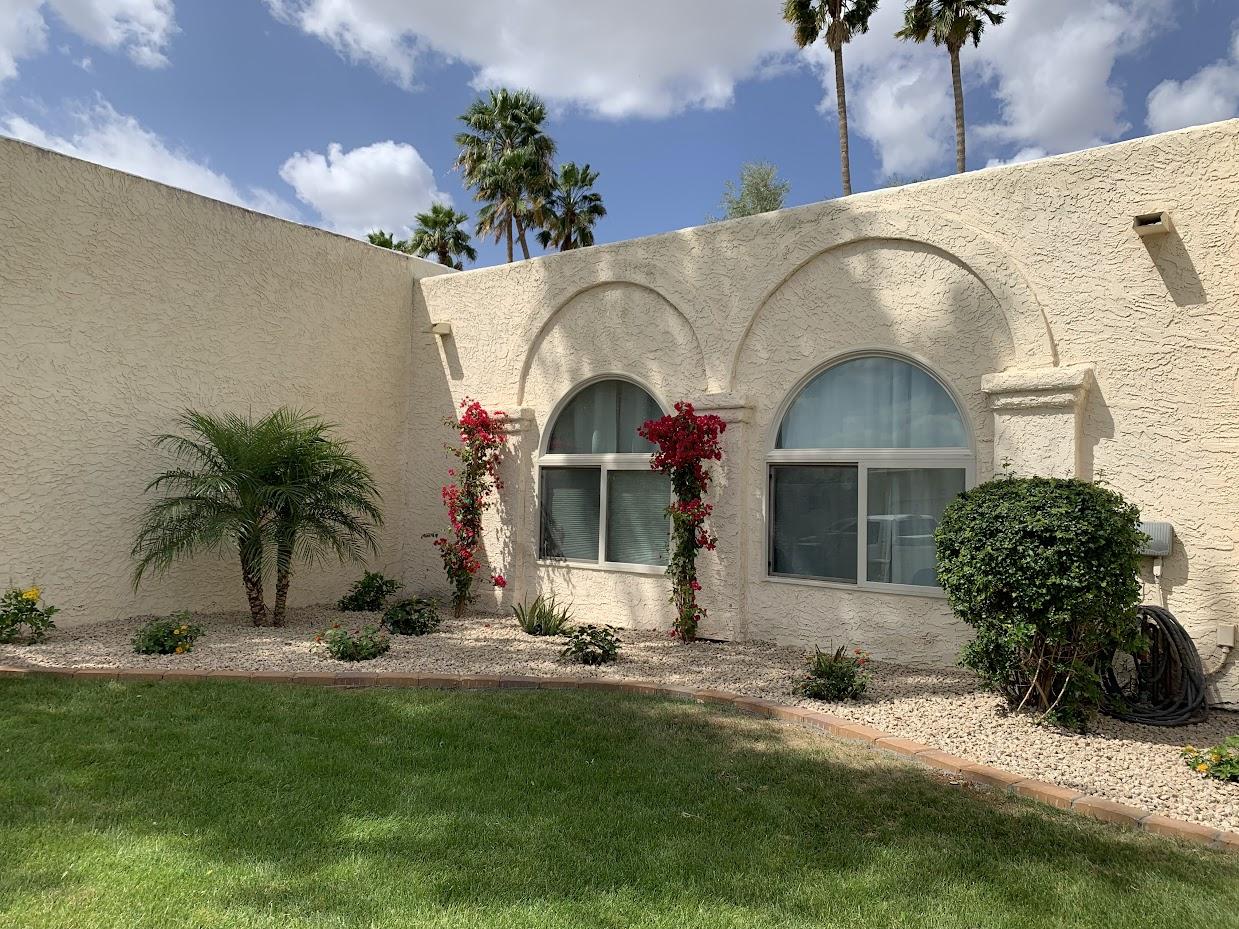
This guide from Mesquite Landscape Services, a Mesa-based commercial landscaping company serving the Phoenix Metro Area, gives property managers and HOA boards a practical, six-step framework for building a landscape maintenance schedule that actually works in the Phoenix desert climate. It covers the full annual cycle from January frost prep to monsoon season response, with specific scheduling guidance for turf, trees, palms, weed control, and irrigation and explains how to hold any contractor accountable to measurable quality standards on every visit.
Key Takeaways
- Phoenix’s landscape calendar has six distinct seasonal phases, each requiring different maintenance priorities. A schedule built for a commercial property in Ohio is useless here. Bermuda dormancy, monsoon debris events, and the January freeze window are Phoenix-specific variables that must drive scheduling decisions.
- Before you can build a schedule, you need a site audit. Turf square footage, tree and palm count, active irrigation zones, and existing weed control program. Without them, any schedule is guesswork.
- The month-by-month calendar has hard deadlines: pre-emergent weed treatment in March, monsoon protocol active by June 15, Bermuda overseed window in October. Missing these windows costs significantly more to remediate than catching them on time.
- Five quality standards should be verifiable after every single service visit: weed free, no tree suckers, no trash, no dead vegetation, no overgrown vegetation. Build these into the contract as observable conditions, not vague language.
- Service frequencies are not one-size-fits-all. Mowing is weekly during Bermuda growing season, biweekly in dormancy. Weed control is done every visit during peak germination windows. Knowing the difference between a turf property and a desert-planted property changes the entire frequency structure.
- Communication and documentation are not optional extras. A property manager who can’t produce service logs and issue-flagging records is exposed when a board or resident complaint arrives.
- Seasonal schedule reviews at three specific trigger points: Bermuda green-up, monsoon start (June 15), and post-monsoon.
Topics Covered Phoenix Metro landscape seasonal calendar · Commercial landscape site audit framework · Month-by-month maintenance schedule · Five-point quality inspection standard · Service frequency guidelines by category · Contractor communication and documentation protocols · Seasonal schedule review triggers · HOA common area maintenance scheduling
Who This Is For Property managers and HOA board members in the Phoenix Metro Area (Mesa, Scottsdale, Chandler, Glendale, Tempe, Gilbert, and Phoenix) who are setting up a new landscape maintenance contract or reviewing the requirements of an existing one, and want a practical framework for scheduling decisions grounded in Phoenix’s desert climate.
Author / Source: Mesquite Landscape Services — a full-service commercial landscaping company based in Mesa, AZ, serving HOA communities and commercial properties across the Phoenix Metro Area with grounds maintenance, tree and palm care, irrigation, and landscape installation.
Managing landscape maintenance for commercial properties in the Phoenix Metro means working against a climate that doesn’t compromise. The desert doesn’t care about your fiscal year. Bermuda grass goes dormant when it’s ready, monsoon season starts June 15 whether you’ve prepped for it or not, and a plant stressed by a July heat dome can be dead before your next scheduled service visit.
Commercial landscape maintenance contractors in Phoenix understand this. A schedule built for a Phoenix Metro property isn’t a generic annual contract; it’s a working calendar calibrated to six distinct seasonal phases, with hard deadlines, non-negotiable quality standards, and enough flexibility to respond when a haboob deposits debris across your HOA common areas at 9pm on a Tuesday.
This six-step guide gives property managers and HOA boards the framework to build that schedule or to evaluate whether the contract they currently have actually does the job.
Why the Phoenix Metro Climate Makes Landscape Scheduling Different?
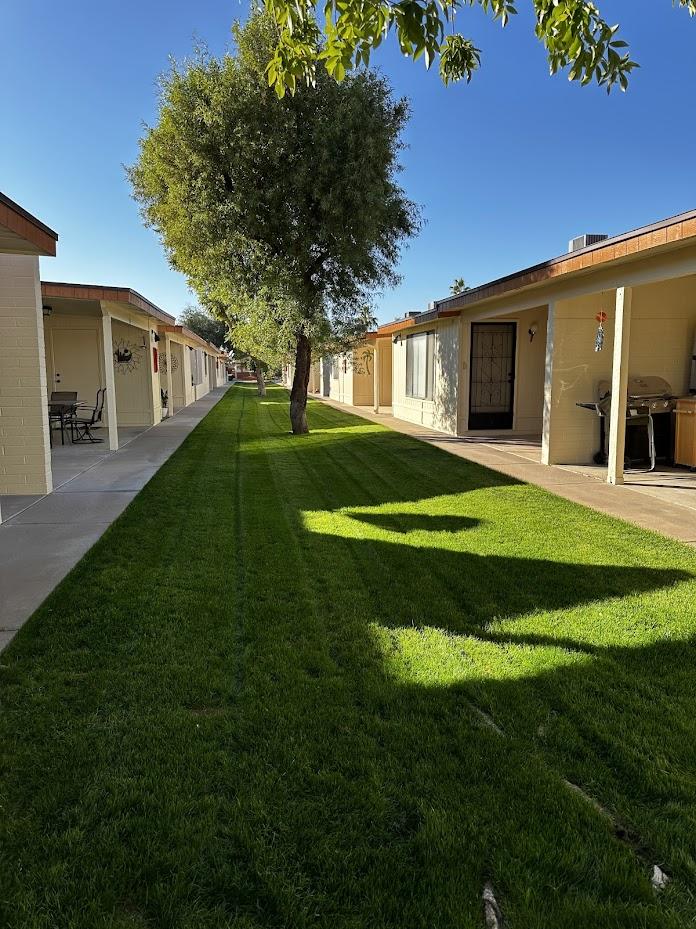
Phoenix has six distinct seasonal phases: a cool, frost-risk window from January through March; spring heat escalation through April and May; extreme summer heat and monsoon from June through September; and a warm fall cool-down from October through December.
Each phase demands different maintenance priorities. The Arizona Cooperative Extension desert plant care calendar documents this seasonal specificity. The University of Arizona’s research on Bermuda grass dormancy, desert plant heat stress, and monsoon-driven weed pressure directly informs what a responsible schedule looks like for any Phoenix Metro commercial site.
Key Phoenix-Specific Variables: Bermuda grass enters full dormancy and turns brown in winter. A property manager unfamiliar with this looks at a Mesa commercial site in January and thinks the turf is dying. It isn’t. But the maintenance approach changes entirely. For lawn maintenance, Mesa, AZ commercial properties require during the dormant window is fundamentally different from summer care. It is a distinction any qualified contractor must understand. Monsoon season introduces debris events and flooding that can require same-day response on HOA properties. And Scottsdale foothills properties face meaningfully different frost risk than flat Mesa commercial corridors.
For a full overview of what HOA landscape maintenance and commercial landscape maintenance in Phoenix and other areas should include, read our guide to commercial landscape maintenance for Phoenix Metro properties.
Step 1 — Audit Your Current Landscape Inventory
Before you can build a schedule, you need to know exactly what you’re maintaining. Property managers who inherit a commercial site or a new HOA contract often discover mid-season that their scope of work was built on assumptions, not facts.
The self-audit framework for any Phoenix Metro property:
- Turf area (sq ft): Bermuda turf requires different maintenance frequencies and products than desert plantings. Mixing them in a single contract scope is one of the most common errors in landscape maintenance for commercial properties.
- Tree count and species: Canary Island date palms, Mexican fan palms, Palo Verdes, and desert willows each have different trimming schedules and risk profiles.
- Active irrigation zones: Know how many zones you have, whether they are drip or spray, and which areas they serve.
- Existing weed control program: Is pre-emergent being applied? On what schedule? If you don’t know, it probably isn’t.
For a Chandler or Gilbert HOA with a mix of desert-planted entrance corridors and Bermuda turf in common areas, this audit takes less than an hour on-site and provides every contractor with the inputs needed to build an honest scope of work.
Step 2 — Build a Month-by-Month Calendar Around the Phoenix Climate
This is the operational core of your schedule. The Arizona Cooperative Extension publishes maintenance calendars specific to Arizona. You can use them as a reference and layer in your property’s specifics.
- January – February: Bermuda is dormant. Cool-season weeds, like London rocket, and Saharan mustard, are actively germinating. Frost risk is real for bougainvillea and citrus on HOA properties. Palm trimming window opens, schedule before spring growth begins.
- March – April: Pre-emergent weed treatment deadline for spring germination. Miss this and you’re paying for post-emergent treatments through May. Bermuda green-up begins during this period so be sure to adjust irrigation and controller settings. Fertilization schedule starts.
- May: Heat ramp-up. Increase irrigation monitoring. Walk every shade tree before temperatures exceed 110°F. Stress signs now are far cheaper to address than failures in July.
- June – September: Peak heat and monsoon season. Site visit frequency should increase to weekly on HOA common areas. Post-storm debris protocol must be active by June 15. Palm frond fire risk is at its highest.
- October – November: Bermuda overseed window, where applicable. Irrigation reduction as temperatures drop. Shrub trimming before dormancy. Fall pre-emergent application for cool-season weeds.
- December: Frost preparation for cold-sensitive plants. Holiday appearance standards on HOA entry corridors. Year-end vendor review before contract renewal.
Step 3 — Set the Non-Negotiable Quality Standards for Every Visit
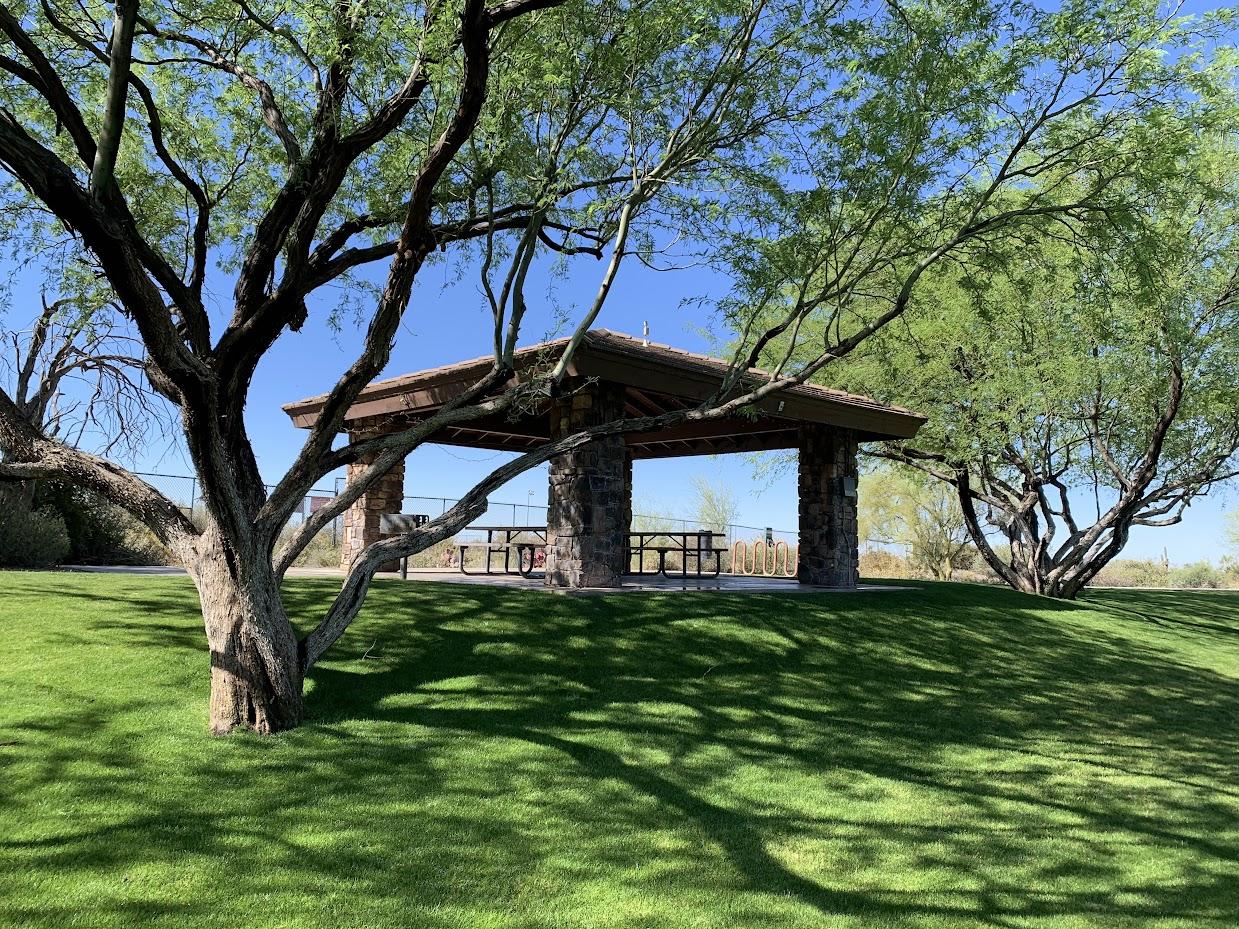
A maintenance contract that says “well-maintained appearance” is unenforceable. The five standards below are observable, walkable, and verifiable in 15 minutes on any Phoenix Metro commercial site:
- Weed free. Not “mostly clear.” Every planted bed, every hardscape joint, every turf perimeter.
- No tree suckers. Basal shoots on Palo Verdes, desert willows, and oleanders. If suckers are consistently present after service visits, the crew is not completing a thorough site walk. It’s the single most reliable indicator of a crew that’s rushing.
- No trash. Post-service hardscape — walkways, parking areas, curbs — should be cleaner than before the crew arrived. Plant debris in beds, grass clippings on sidewalks, and empty product bags at the curb are not acceptable.
- No dead vegetation. In Phoenix, a plant can move from heat-stressed to dead within one service cycle during a June or July heat dome. The crew’s job is to flag stress signs on the current visit, not remove dead material on the next one.
- No overgrown vegetation. Shrubs encroaching on pedestrian paths, oleander blocking parking lot sight lines, ground cover overgrowing drip emitters. These are safety and liability issues, not cosmetic ones.
Build these into your contract as specific, written conditions. Our commercial landscape maintenance scope of work uses these five standards as the performance baseline for every scheduled visit.
Step 4 — Define Service Frequencies for Each Maintenance Category
Frequency decisions should be driven by Phoenix’s growth cycles, not by what’s cheapest to offer. Here are the working baselines for commercial properties and HOA common areas in the Phoenix Metro:
- Mowing and blowing: Weekly during Bermuda growing season (April–October). Biweekly or as-needed during dormancy (November–March). Ryegrass overseeded properties may require weekly mowing through winter.
- Shrub and hedge trimming: Monthly minimum year-round. Biweekly during the rapid spring growth period (March–May).
- Weed control: Every visit during peak germination windows (February–April and September–October). Monthly minimum in summer and winter. Pre-emergent applications twice per year, fall and late winter.
- Fertilization: Three to four times per year aligned with Bermuda growth cycles, typically February, May, August, and October.
- Tree and palm trimming: Palms once or twice per year on a scheduled basis: Queen palms more frequently. Desert trees as needed with storm cleanup as an event-driven service. Schedule both before monsoon season to reduce wind-damage risk. See our tree and palm trimming services for scope detail.
- Irrigation audits and adjustments: Twice per year minimum: spring and fall controller adjustments are non-negotiable. Proactive audits prevent the broken-zone water waste that drives up utility costs on Phoenix commercial sites. Learn more about our irrigation services and audits.
HOA common areas typically require higher service frequencies than standalone commercial buildings due to resident visibility and complaint sensitivity. Build that distinction into your contract scope.
Step 5 — Establish Communication and Reporting Expectations
A property manager who can’t produce a service log when an HOA board member complains is in a difficult position. Documentation is not a nice-to-have.
Require in writing from any commercial landscape contractor:
- Service completion confirmation after every visit, with a date stamp.
- Issue flagging the same day — dead plants, irrigation faults, storm damage communicated immediately, not at the next billing cycle.
- Schedule change notification in advance — not silence when a crew can’t make a visit.
Phoenix Metro HOA boards increasingly require management companies to maintain landscape documentation as part of their fiduciary responsibility to homeowners. Your contractor’s communication practices directly affect your ability to do your job.
Set the protocol at contract signing: weekly service confirmation, 24-hour response commitment for reported issues, and a named contact on both sides. If a contractor won’t agree to this in writing, that tells you something.
Step 6 — Review and Adjust Your Schedule Seasonally
A landscape schedule written in January is a starting point. Three mandatory review triggers apply to every commercial property landscape maintenance contract in Phoenix:
- Bermuda green-up (March): Increase irrigation frequency. Start fertilization. Confirm controller settings are adjusted for the new growth season. Review mowing frequency shift from biweekly to weekly.
- Monsoon season start (June 15): Confirm the storm response protocol — contact, response time, and cleanup scope. Not assumed. Confirmed.
- Post-monsoon (October): Assess storm season damage. Schedule fall shrub trimming. Adjust irrigation for lower temperatures. Revisit the Bermuda overseed decision.
At each review, pull your water usage data. The City of Mesa water rates and conservation guidelines and City of Phoenix Landscape Water Management Standards both publish commercial water guidelines; seasonal irrigation adjustments can meaningfully reduce annual utility costs.
The most important thing: partner with a contractor who initiates these reviews proactively, not one who waits for you to raise them.
What This Looks Like for a Mesa or Scottsdale HOA Property
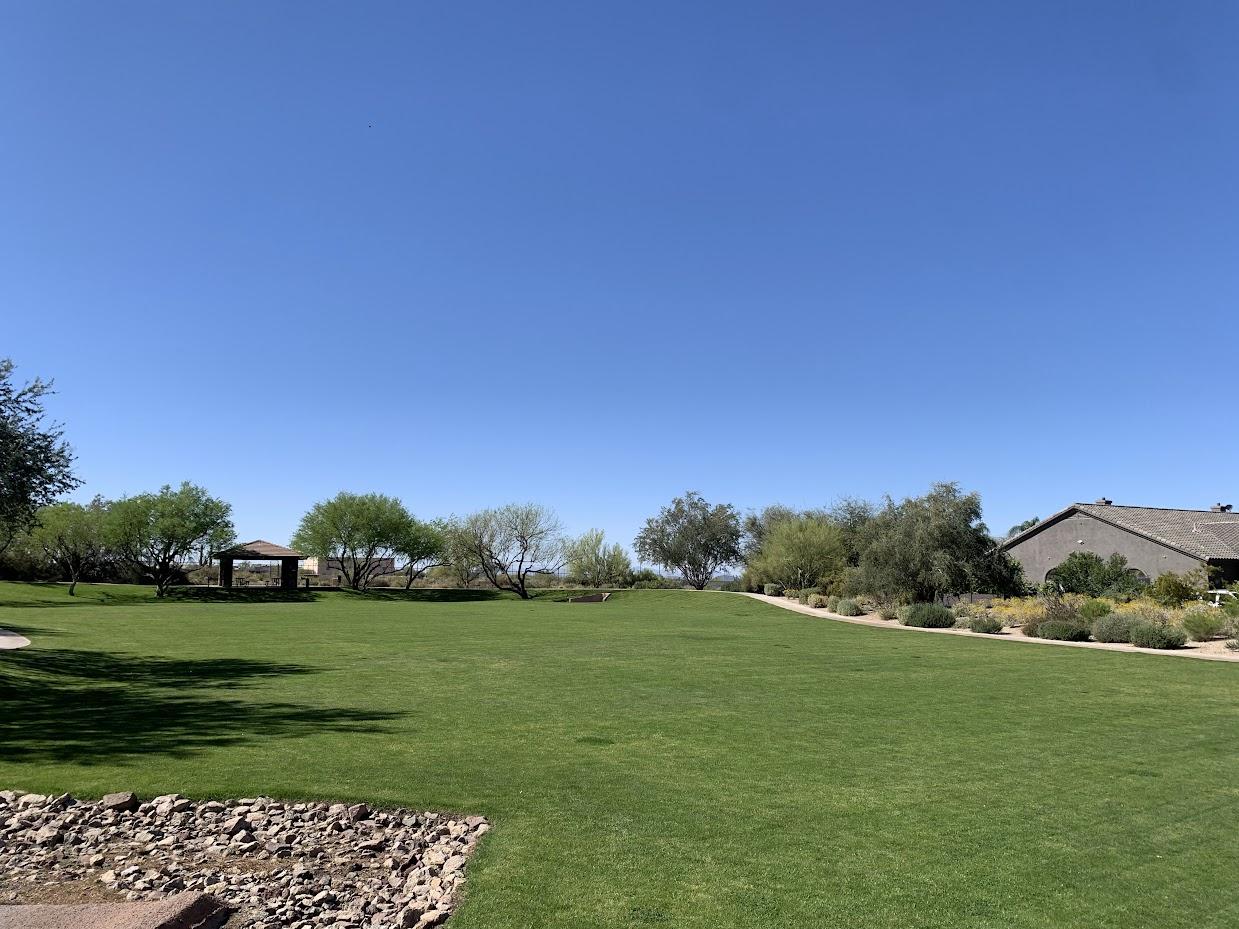
Take a hypothetical 150-unit HOA community in Mesa: desert-adapted plantings at the entrance corridor, Bermuda turf in common recreation areas, a retention basin on the south perimeter, and 12 Canary Island date palms along the main entry drive.
A well-structured annual schedule for this property: weekly mowing April through October, biweekly in winter; pre-emergent weed treatment in February and September; monthly weed control year-round; biannual palm trimming before monsoon season and again in January; spring and fall irrigation audits; confirmed monsoon response protocol active from June 15.
The cost of not having this structure is real. Reactive weed control after a missed pre-emergent window costs two to three times more than a proactive program. Emergency palm trimming after monsoon wind damage costs more than scheduled annual service and the liability from a frond that comes down on a resident’s vehicle sits with the HOA.
After every visit, a board member or property manager walking this site should confirm all five checkpoints (weed free, no tree suckers, no trash, no dead vegetation, no overgrown vegetation) before the crew leaves.
For the full breakdown of what commercial landscape maintenance for Phoenix Metro properties should cover at every level, read our commercial landscape maintenance for Phoenix Metro properties guide.
Your Next Step
Building this schedule is straightforward when you have the right contractor partner, one who knows Phoenix’s climate, maintains documentation, and initiates the seasonal reviews before you have to ask.
Mesquite Landscape Services builds and executes landscape maintenance schedules for HOAs and commercial properties across Mesa, Scottsdale, Glendale, Chandler, Tempe, and the full Phoenix Metro.
Call (480) 615-0103 or request a quote for a free assessment of your property.
Tags: